
The construction sector across Nigeria’s burgeoning economic landscape is experiencing an unprecedented demand for concrete infrastructure. From the sprawling commercial developments in Lagos to the ambitious road networks in Abuja, the need for reliable, high-volume concrete production is paramount. To meet this exigency, many contractors and developers are looking eastward, specifically toward Chinese manufacturers, for their concrete batch plant requirements. However, the acquisition of this heavy machinery involves far more than a simple purchase order. It is a complex, multifaceted undertaking governed by international logistics, fiscal policy, and operational economics. The import route for Chinese batch plants into Nigeria presents a labyrinth of considerations, where the initial cost savings can be significantly offset by the cumulative effects of shipping, duties, and post-commissioning expenditures. A comprehensive understanding of this pathway is essential for any entity seeking to leverage foreign equipment without compromising project viability.
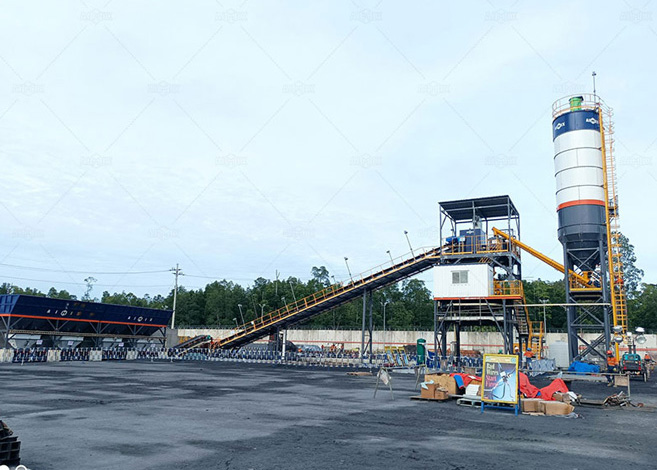
Navigating the Maritime and Overland Logistics Corridor
The physical journey of a concrete batch plant from a Chinese manufacturing hub to a Nigerian jobsite is an exercise in meticulous coordination. The process typically commences with freight consolidation at major ports like Shanghai or Guangzhou, where the disassembled components are containerized or loaded as break-bulk cargo onto specialized vessels. The maritime route traverses the South China Sea, transits the Strait of Malacca, and crosses the vast expanse of the Indian Ocean before rounding the Horn of Africa to enter the Gulf of Guinea. This voyage, spanning approximately 30 to 45 days, subjects the equipment to the corrosive marine environment, necessitating rigorous export packaging to prevent oxidation and mechanical degradation. Upon arrival at a Nigerian port such as Apapa or Tin Can Island, the complexities amplify. Port congestion is a persistent bottleneck, often resulting in demurrage charges that accrue daily. The subsequent overland transportation to inland sites requires heavy-lift trucks and escorts, navigating roads not always designed for such massive loads. This logistical odyssey, from factory floor to foundation, constitutes a significant portion of the total landed cost and demands a logistics partner with demonstrable expertise in handling oversize, heavy industrial cargoes within the Nigerian context.
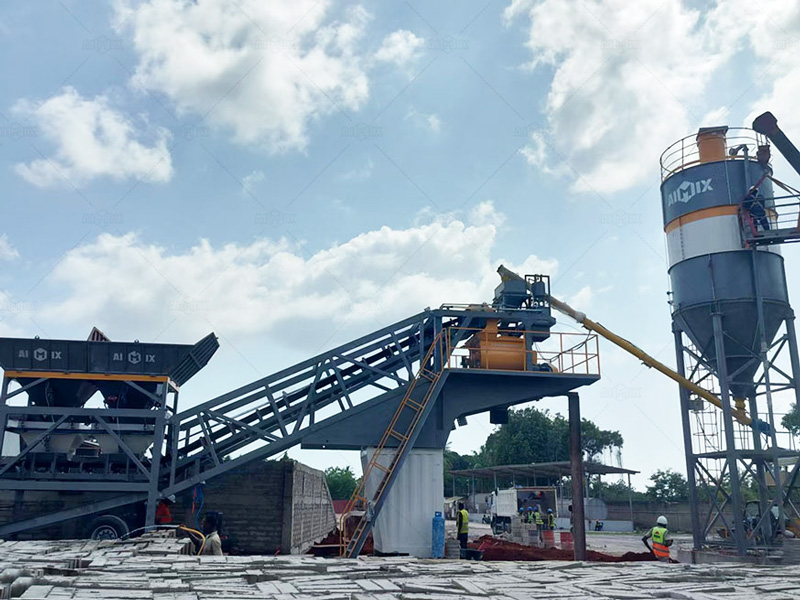
Fiscal Implications of Import Duties and Customs Valuation
he financial architecture of importing capital equipment is heavily influenced by Nigeria’s customs regulations, administered by the Nigeria Customs Service (NCS). The applicable import duty for concrete batching plant in Nigeria generally falls under the HS Code for industrial machinery, but the precise tariff can fluctuate based on specific components and prevailing fiscal policy measures designed to encourage local manufacturing. Calculating the duty is not a straightforward percentage of the purchase price; the NCS utilizes the Free-on-Board (FOB) value, plus freight and insurance, to arrive at the CIF (Cost, Insurance, Freight) value, upon which the duty is assessed. This valuation process is susceptible to verification checks, and any discrepancy between declared value and the NCS’s own valuation database can lead to protracted clearing processes and potential penalties. Furthermore, in addition to the base import duty, levies such as the seven percent port surcharge and fees for the Pre-Arrival Assessment Report (PAAR) must be factored into the fiscal equation. These cumulative charges can elevate the effective tax rate on imported machinery to a level that substantially erodes the initial price advantage, compelling importers to conduct a forensic analysis of all potential fiscal obligations before committing to the import route.
Operational Expenditures and Post-Importation Cost Dynamics
Acquiring the batch plant is merely the prologue to the true financial story, which is written during its operational lifespan. Chinese batch plants, while competitively priced, introduce a distinct set of cost dynamics related to maintenance, consumables, and technical support. The availability of genuine spare parts in the Nigerian market is often inconsistent, leading to extended periods of downtime while components are sourced from China. This “waiting-for-parts” scenario directly impacts project timelines and profitability. Additionally, the technical specifications of these small concrete plants may differ from European or American standards, creating a dependency on specific suppliers for wear parts like mixer liners and belts. The quality of the electrical and automation components can also be variable; a failure in a programmable logic controller (PLC) may necessitate specialized troubleshooting that is not readily available locally. Consequently, prudent operators establish a comprehensive inventory of critical spares before commissioning and cultivate a relationship with a responsive technical support representative. The true cost of the machine is therefore amortized over its productive life, and this long-term view often reveals that the cheapest initial acquisition can lead to the highest total cost of ownership if logistical, fiscal, and operational factors are not meticulously managed from the outset.
Comments
No comments yet. Be the first to react!