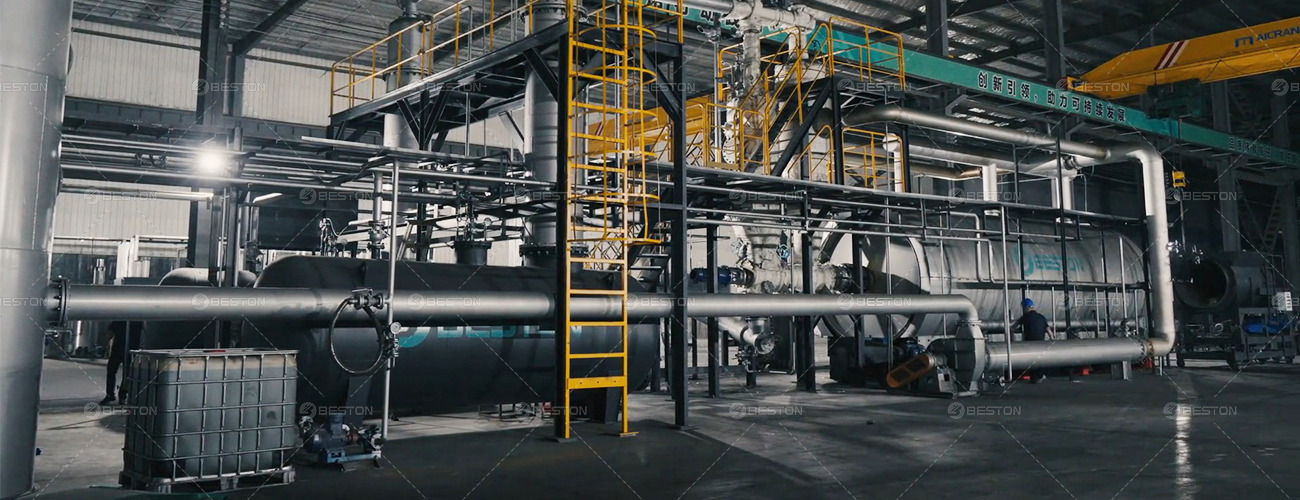
Tire pyrolysis has evolved into a commercially significant waste-to-resource industry capable of converting end-of-life tires into fuel oil, recovered carbon black, steel, and combustible gas. Rising landfill restrictions and circular economy policies have further stimulated market interest. Yet many investors enter the sector with an incomplete understanding of project economics.
A tire pyrolysis project rarely fails because of technological impossibility alone. More often, financial underestimation and planning deficiencies create operational distress. Equipment price represents only one component within a much broader expenditure matrix.
A successful project therefore requires scrutiny of total lifecycle cost rather than reliance on simplified supplier quotations.
Understanding where hidden expenditure accumulates is essential for avoiding costly miscalculation.
Equipment Price Is Only the Starting Point
The Difference Between Equipment Cost and Project Cost
Many first-time investors focus almost exclusively on reactor pricing.
While the reactor and auxiliary system form the technological nucleus of a tyre pyrolysis plant, project expenditure extends far beyond machinery procurement.
Major cost categories typically include:
- Equipment acquisition
- Civil construction
- Utility infrastructure
- Transportation and logistics
- Installation and commissioning
- Environmental protection systems
- Automation and control systems
- Labor and training
A quotation covering only mechanical equipment may create a misleading impression of affordability.
Consequently, comparing projects solely by equipment price often leads to erroneous investment decisions.
Low-Cost Equipment May Carry Hidden Expense
Aggressive pricing occasionally conceals deficiencies in design or fabrication quality.
Lower-cost systems may suffer from:
- Inferior steel specification
- Weak sealing performance
- Limited thermal efficiency
- Poor welding quality
- Shortened equipment lifespan
These deficiencies frequently reappear later as maintenance expenditure and production interruption.
Initial savings may therefore evolve into long-term operational liabilities.
Site Preparation and Civil Construction Are Frequently Underestimated
One of the more common budgeting errors involves inadequate attention to site development.
A tire pyrolysis facility generally requires substantial supporting infrastructure.
Typical civil works include:
- Foundation engineering
- Drainage systems
- Internal roads
- Workshop construction
- Storage zones
- Fire protection facilities
- Utility connections
Ground conditions may significantly affect expenditure. Weak soil, flood risk, or uneven terrain can increase engineering complexity and prolong construction schedules.
Infrastructure planning should therefore begin during feasibility assessment rather than after equipment procurement.
Neglecting this phase often results in cascading cost escalation.
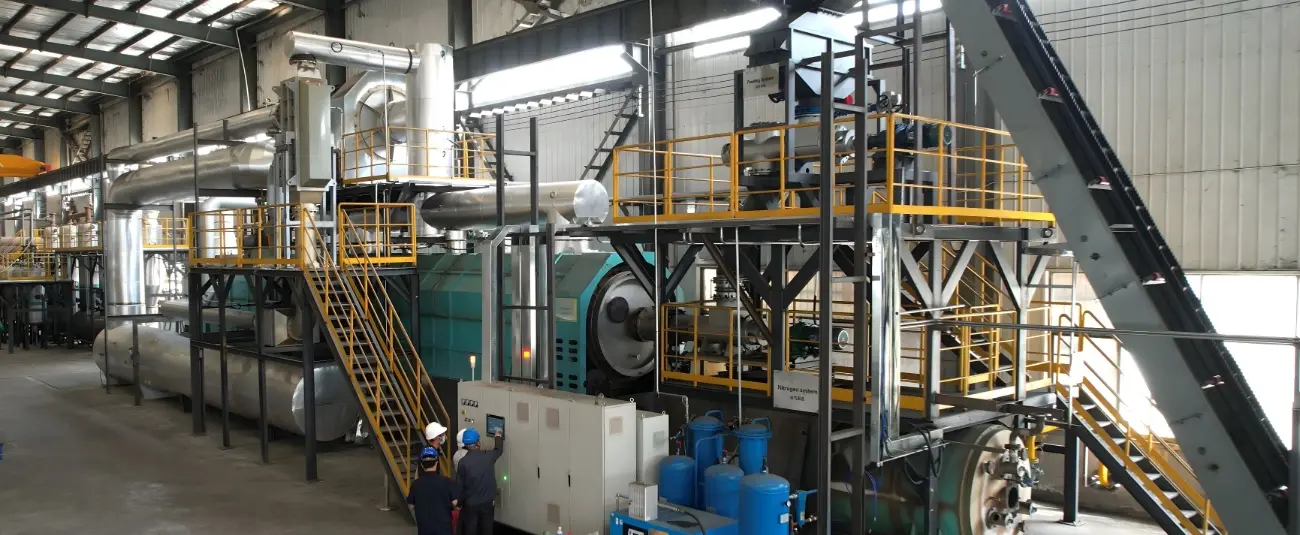
Environmental Compliance Can Reshape the Budget
Emission Control Is Not Optional
Environmental compliance represents one of the most consequential cost of tyre pyrolysis plant.
Thermal conversion of tire material generates combustible gas and process emissions requiring treatment and monitoring.
Environmental systems may include:
- Dust filtration
- Desulfurization equipment
- Flue gas purification
- Wastewater treatment
- Odor management
- Continuous emission monitoring
In many jurisdictions, environmental permitting cannot be obtained without comprehensive pollution-control architecture.
Attempting to minimize these systems during procurement frequently produces regulatory delays or retrofit expense later.
Environmental investment should therefore be regarded as core infrastructure rather than ancillary equipment.
Permitting and Regulatory Expense
Regulatory approval itself can impose substantial financial burden.
Developers may encounter expenditure related to:
- Environmental impact assessment
- Engineering certification
- Legal consultation
- Government application fees
- Safety review
- Compliance testing
Permitting timelines may also affect financing and cash flow.
A project delayed by incomplete documentation or regulatory nonconformity can experience considerable opportunity cost.
Feedstock Economics Deserve Early Attention
Many investment models assume continuous access to inexpensive waste tires. In practice, feedstock procurement can become a decisive operational variable.
Tire supply depends on:
- Regional waste generation
- Collection efficiency
- Transportation distance
- Competitive demand
- Government regulation
In certain regions, tire waste has transitioned from disposal burden to commercial commodity.
This evolution changes procurement economics substantially.
Failure to secure stable supply contracts may result in feedstock volatility and reduced plant utilization.
Since profitability depends heavily on throughput consistency, feedstock strategy should be established before construction begins.
Utility Consumption and Operating Expense
Operational expenditure often receives insufficient attention during early planning.
A pyrolysis plant requires sustained energy and utility input despite partial energy recovery from non-condensable gas.
Operating cost categories commonly include:
- Electricity
- Water supply
- Auxiliary fuel
- Maintenance materials
- Labor
- Spare parts
- Waste disposal
Energy efficiency therefore exerts direct influence on long-term profitability.
Older or poorly designed systems may consume excessive fuel and generate unstable thermal conditions, diminishing economic performance.
Investors should evaluate not only theoretical production capacity but also utility intensity and operational reliability.
Product Revenue Assumptions Require Caution
Financial projections frequently depend on optimistic assumptions regarding product pricing.
Typical tire pyrolysis outputs include:
- Pyrolysis oil
- Recovered carbon black
- Steel wire
- Combustible gas
However, market value varies significantly according to product quality and regional demand.
Recovered carbon black, for example, may require additional upgrading before entering higher-value industrial markets. Similarly, fuel oil pricing depends on local regulations and refining demand.
Overestimating product revenue can distort feasibility analysis and produce unrealistic payback expectations.
Conservative pricing assumptions generally create more resilient financial planning.
After-Sales Support and Technical Service Matter
Equipment acquisition should not be evaluated solely through mechanical specification.
Technical support influences long-term performance in several ways:
- Operator training
- Troubleshooting response
- Spare-part availability
- Process optimization
- Maintenance guidance
Insufficient supplier support can prolong downtime and complicate commissioning.
A technically sophisticated system without reliable service infrastructure may become operationally burdensome.
Evaluating supplier capability therefore represents a risk-management exercise rather than merely a purchasing decision.
Building Financial Resilience Into Tire Pyrolysis Projects
Tire pyrolysis projects possess substantial resource recovery and commercial potential, but profitability depends on disciplined investment planning.
Cost pitfalls rarely emerge from a single catastrophic mistake. More commonly, they accumulate through underestimated infrastructure, inadequate environmental budgeting, unstable feedstock assumptions, and unrealistic revenue expectations.
Projects that evaluate total expenditure, regulatory obligation, and operational sustainability from the outset are better positioned to avoid financial attrition and achieve durable industrial performance.

Comments
No comments yet. Be the first to react!