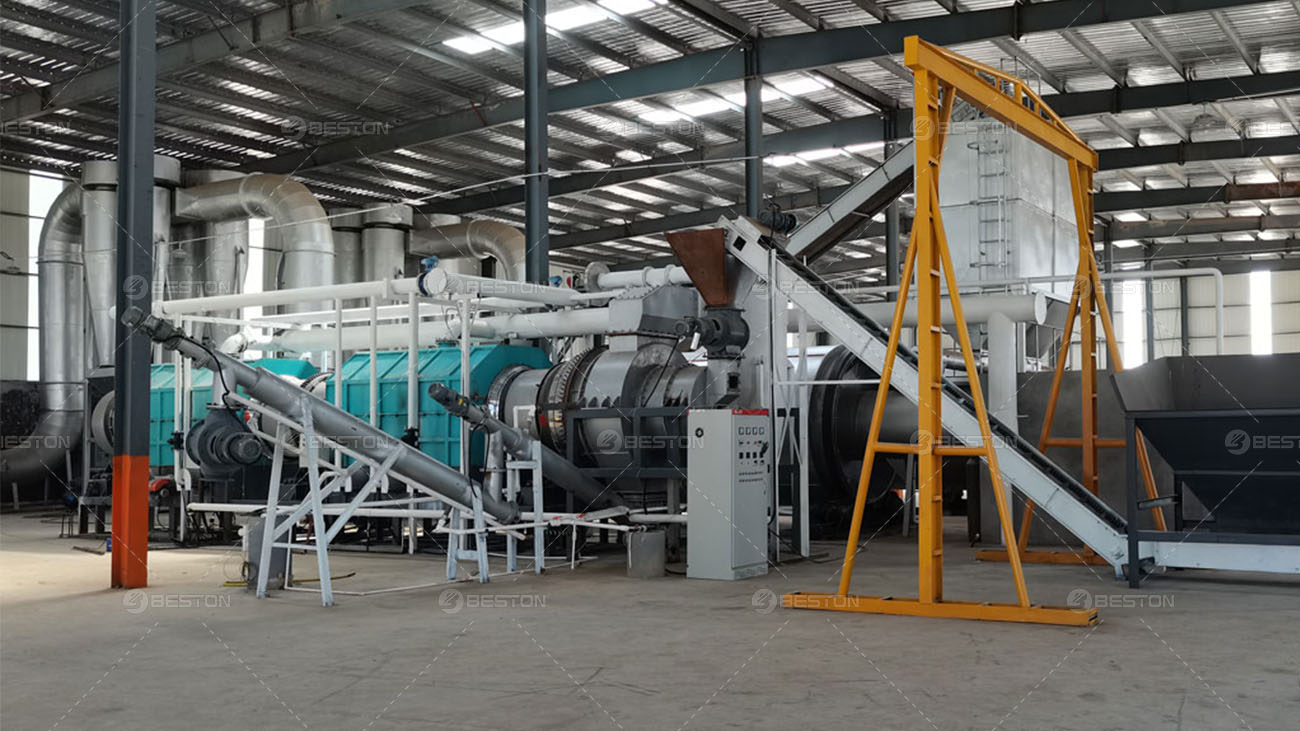
Rice husk is one of the world’s most abundant agricultural by-products, generated during the milling of paddy rice. Every year, millions of tons of rice husk are produced across major rice-growing regions, creating both a waste management challenge and a valuable biomass resource. Through pyrolysis, rice husk can be converted into biochar, combustible gas, and condensable liquid, transforming an underutilized residue into commercially valuable products.
However, not every location is equally suitable for a rice husk pyrolysis project. The long-term viability of such facilities depends on regional feedstock availability, logistics, infrastructure, market demand, environmental regulations, and investment conditions. A carefully selected location can significantly improve project economics while reducing operational risk.
Successful project planning therefore begins with evaluating regional suitability rather than equipment selection alone.
Regions With Large and Stable Rice Production
The most suitable locations are naturally those with substantial rice cultivation and processing activities. Rice husk is generated continuously by rice mills, making milling centers the primary feedstock source for pyrolysis facilities.
Regions with high annual rice production offer several advantages. They provide a consistent supply of biomass throughout the harvesting season and often maintain year-round availability through stored paddy and continuous milling operations.
Countries throughout South Asia, Southeast Asia, East Asia, and parts of South America possess extensive rice production systems that generate considerable quantities of rice husk every year. Within these countries, clusters of commercial rice mills often provide ideal locations for biomass pyrolysis plant because feedstock collection becomes more efficient.
Stable agricultural production reduces uncertainty in raw material procurement and supports continuous plant operation.

Proximity to Rice Mills Reduces Logistics Costs
Transportation is one of the most important economic considerations for rice husk pyrolysis.
Rice husk has a relatively low bulk density, meaning large volumes must be transported to supply a commercial-scale rice husk carbonizer facility. As transport distance increases, logistics expenses can quickly become a significant portion of operating costs.
Locating a pyrolysis plant near major rice milling centers minimizes transportation requirements while improving supply chain reliability.
Some projects establish long-term cooperation with multiple nearby rice mills, ensuring a diversified feedstock network rather than relying on a single supplier. This approach improves operational resilience if production fluctuates at individual facilities.
Reducing transportation not only lowers operating expenses but also decreases fuel consumption and associated emissions throughout the biomass supply chain.
Areas With Limited Alternative Biomass Utilization
Regional competition for biomass resources also influences project feasibility.
In some locations, rice husk already has established markets for power generation, animal bedding, construction material, or industrial fuel. Strong competition may increase feedstock prices and reduce project profitability.
Conversely, regions where rice husk remains underutilized or is frequently disposed of through open burning often provide more attractive investment opportunities.
Converting surplus agricultural residue into valuable carbon products simultaneously reduces environmental impacts and creates additional income for local agricultural industries.
Evaluating existing biomass utilization patterns is therefore an essential component of project feasibility studies.
Infrastructure Supports Industrial Operation
Even when feedstock resources are abundant, inadequate infrastructure can limit project performance.
An ideal project location should provide reliable electricity, transportation networks, water supply, telecommunications, and maintenance services.
High-quality road connections facilitate feedstock collection from multiple rice mills while simplifying product distribution to downstream customers.
Where export markets are important, proximity to ports or railway networks may improve logistics efficiency and reduce shipping costs.
Industrial infrastructure also supports equipment installation, routine maintenance, and future capacity expansion.
Market Access Determines Commercial Value
The optimal location should balance feedstock availability with access to product markets.
Rice husk pyrolysis produces biochar that may be used in agriculture, environmental remediation, industrial applications, or carbon removal projects. Depending on production technology, combustible gas can support internal energy demand, while condensable liquid may offer additional commercial opportunities.
Facilities located near agricultural regions may benefit from strong local demand for soil improvement products. Industrial zones may provide opportunities for supplying carbon materials or renewable energy products.
Some projects also target export markets for biochar, making efficient transportation infrastructure increasingly important.
Market proximity reduces distribution costs and improves customer responsiveness.
Environmental and Regulatory Conditions
Environmental policy increasingly influences biomass utilization projects.
Many governments encourage alternatives to open-field burning and landfill disposal of agricultural residues. Regions promoting renewable energy, biomass utilization, circular economy initiatives, or carbon reduction strategies may offer favorable policy environments for rice husk pyrolysis.
At the same time, environmental regulations governing air emissions, wastewater management, and industrial permitting must be carefully evaluated during project planning.
Selecting industrial land with established permitting pathways can simplify project development and reduce approval timelines.
Early assessment of local regulatory requirements helps minimize investment uncertainty.
Carbon Market Potential
As carbon removal markets continue to develop, some rice husk pyrolysis projects are designed to produce biochar for long-term carbon sequestration.
Regions with strong institutional support for carbon accounting, biomass sustainability, and environmental monitoring may provide additional commercial opportunities beyond conventional biochar sales.
Projects pursuing carbon credit generation generally require robust feedstock traceability, standardized production, product testing, and comprehensive documentation.
Although carbon markets are not suitable for every project, they may significantly enhance long-term revenue where applicable.
Building a Sustainable Rice Husk Pyrolysis Industry
The most suitable regions for rice husk pyrolysis projects combine abundant feedstock, efficient logistics, supportive infrastructure, accessible product markets, and a favorable regulatory environment. No single factor determines project success; rather, long-term profitability depends on the interaction of these regional conditions.
Developers should evaluate feedstock stability, transportation distance, industrial infrastructure, market accessibility, environmental compliance, and future expansion potential as part of a comprehensive feasibility assessment. By selecting locations that optimize the entire biomass value chain, rice husk pyrolysis projects can achieve lower operating costs, higher resource utilization, and stronger commercial resilience.
As global interest in sustainable biomass conversion continues to grow, strategically located rice husk pyrolysis facilities will play an increasingly important role in agricultural waste management, renewable carbon production, and circular economy development.

Comments
No comments yet. Be the first to react!